Background: Trauma is defined as physical injury resulting from exposure to external energy. Major trauma poses a significant public health challenge in Sudan, where effective pre-hospital care is critical for survival and better outcomes, yet remains underdeveloped. This study aimed to quantitatively assess the pre-hospital management received by major trauma patients at a tertiary hospital in Khartoum State. Methods: A descriptive, cross-sectional, hospital-based study was conducted at Ibrahim-Malik Hospital in August 2022. We enrolled 308 major trauma patients via consecutive sampling. Data on demographics, trauma characteristics, and the delivery of 14 predefined standard interventions were collected via face-to-face interviews. The primary outcome was the proportion of needed interventions actually delivered. Results: The majority of participants were male (79%) and aged 17-40 years (80%). The most common injury mechanisms were road traffic accidents (24%), being hit by solid objects (24%), and stab wounds (23%). Only 2% of patients were transported by ambulance. While 73% received some form of first aid, merely 3% received it from a trained person. Critically, 81% of patients received less than 40% of their needed interventions. Significant gaps were identified in managing airway obstruction (only 13% of affected patients received care) and controlling bleeding (59%). Conclusion: Pre-hospital trauma care in Khartoum is significantly inadequate, characterized by reliance on untrained laypersons, severely limited ambulance services, and a critical deficit in essential intervention delivery. Urgent establishment of a formal pre-hospital care system, including community first responder training and expanded ambulance coverage, is imperative to mitigate preventable trauma deaths and disabilities.
This is an Open Access article, distributed under the terms of the Creative Commons Attribution 4.0 International License (http://creativecommons.org/licenses/by/4.0/), which permits unrestricted use, distribution and reproduction in any medium or format, provided the original work is properly cited.
Pre-hospital Care, Trauma Management, Sudan, First Aid, Epidemiology, Critical Care
1. Introduction
Trauma poses a formidable global public health challenge, resulting in millions of deaths and disabilities annually. The burden is disproportionately high in low- and middle-income countries (LMICs), which account for over 90% of injury-related deaths worldwide
[1]
World Health Organization. Injury and violence. 2021. Available from:
. A recent scoping review further underscores the systemic weaknesses in African emergency medical services that contribute to this burden
[10]
Mould-Millman, N. K., et al. (2021). State of Emergency Medical Services (EMS) Systems in Africa: A Scoping Review. Prehospital Emergency Care, 25(5), 697-711.
. In Sudan, trauma constitutes a significant health burden, representing approximately 7% of all hospital attendances according to the national 2020 health statistical report
[2]
Federal Ministry of Health - Sudan. Annual Health Statistical Report. Khartoum; 2020.
[2]
. Road traffic accidents, a leading mechanism, remain a critical issue as highlighted in the most recent global report
[13]
World Health Organization. (2023). Global Status Report on Road Safety 2023. Geneva: World Health Organization. Licence: CC BY-NC-SA 3.0 IGO.
[13]
.
The "golden hour" following a traumatic injury is a critical period during which timely and effective pre-hospital management—encompassing prompt first aid, resuscitation, and safe transport—serves as a cornerstone for improving survival rates and reducing long-term disability
[3]
Gauss T, Ageron FX, Devaud ML, et al. Association of Prehospital Time to In-Hospital Trauma Mortality in a Physician-Staffed Emergency Medicine System. JAMA Surgery. 2019, 154(12), 1117-1124.
. Internationally recognized programs like Pre-hospital Trauma Life Support (PHTLS) and Advanced Trauma Life Support (ATLS) provide standardized frameworks for this essential care
[4]
National Association of Emergency Medical Technicians. PHTLS: Prehospital Trauma Life Support. 9th ed. Jones & Bartlett Learning; 2021.
[5]
American College of Surgeons Committee on Trauma. Advanced Trauma Life Support (ATLS) Student Course Manual. 10th ed. American College of Surgeons; 2018.
[4, 5]
.
In many LMICs, formal pre-hospital care systems are fragmented or non-existent
[6]
Elsayed DEM, Eltayeb EM. Pre-hospital and in-hospital Management of Non-fatal Road Traffic Injuries in Khartoum State: A Case Study. Sudanese Journal of Public Health. 2012, 7(3), 98-103.
[6]
. In Sudan, the provision of care before hospital arrival is largely uncoordinated, relying predominantly on the ad-hoc assistance of bystanders and informal transport modes
[6]
Elsayed DEM, Eltayeb EM. Pre-hospital and in-hospital Management of Non-fatal Road Traffic Injuries in Khartoum State: A Case Study. Sudanese Journal of Public Health. 2012, 7(3), 98-103.
[6]
. While a previous study in Khartoum touched upon pre-hospital care for road traffic injuries
[6]
Elsayed DEM, Eltayeb EM. Pre-hospital and in-hospital Management of Non-fatal Road Traffic Injuries in Khartoum State: A Case Study. Sudanese Journal of Public Health. 2012, 7(3), 98-103.
[6]
, a detailed assessment quantifying the specific interventions needed versus those delivered for all major trauma mechanisms is lacking
[16]
Zogg, C. K., et al. (2024). Gaps in Prehospital Care for Trauma Patients in Low- and Middle-Income Countries: A Call for Standardized Data Collection. Injury, 55(1), 111-119.
. This study was therefore conducted to systematically quantify this gap in pre-hospital trauma care at a major tertiary facility in Khartoum State. The findings aim to provide a robust evidence base to inform the development of targeted interventions to strengthen the emergency medical response system in Sudan.
2. Materials and Methods
2.1. Study Design, Setting, and Population
A descriptive, cross-sectional, hospital-based study was conducted at Ibrahim-Malik Hospital in Khartoum, Sudan, during August 2022. This hospital is a high-caseload tertiary facility receiving trauma cases from a large catchment area. The study population consisted of patients with major trauma presenting to the emergency department. Agitated, severely ill, and comatose patients were excluded for ethical and practical reasons related to obtaining informed consent and ensuring reliable data collection.
2.2. Sample Size and Sampling
A consecutive sampling strategy was employed over a defined period from August 13 to 28, 2022. The final sample size was 308, comprising all eligible major trauma patients who attended the hospital during this period. This census approach was chosen to ensure a representative snapshot of cases.
2.3. Data Collection and Variables
Data were collected through face-to-face interviews using a structured, pre-tested questionnaire on an Android mobile phone using Epi Info 7.2 software. The study variables included:
Personal Variables: Age, sex, education level, occupation.
Trauma Characteristics: Mechanism of injury, time of incident, location, availability of a first aid box at the scene.
Clinical Assessment: Presence of conditions such as airway obstruction, breathing difficulties, active bleeding, and fractures.
Interventions and Transport: Type of pre-hospital interventions delivered (e.g., bleeding control, airway management), time to first aid, and mode of transportation to the hospital.
Fourteen variables were pre-defined as "standard interventions" for analysis. The primary outcome was the proportion of interventions delivered, calculated for each patient as (Number of interventions delivered / Number of interventions needed) × 100.
2.4. Data Management and Statistical Analysis
The collected data were checked for completeness, entered into Microsoft Excel, and analyzed using SPSS version 20. Descriptive statistics, including frequencies and proportions, were generated for all variables. The results are presented in text, tables, and figures.
3. Results
3.1. Demographic and Clinical Characteristics
The study involved 308 participants. The mean age was 29 years (range: 2-71), with 80% (n=247) belonging to the 17-40 age group. The majority of participants were male (79%, n=244). Most participants had completed at least a secondary school education (74%, n=230). Non-governmental workers constituted the largest occupational group (43%, n=132).
3.2. Trauma Characteristics and Pre-hospital Care
The most common trauma mechanisms were road traffic accidents (24%, n=74), being hit by solid material (24%, n=73), and stab wounds (23%, n=72). Head injuries were the most frequently affected body part (34%, n=105) (Table 1). Clinically, 67% (n=205) of patients presented with bleeding, 20% (n=61) with breathing difficulties, and 6% (n=22) with airway obstruction. A first aid box was available at the scene in only 1% of cases.
Regarding pre-hospital interventions and transport, 73% (n=225) of patients received some form of first aid, but only 3% (n=9) received it from a trained person. The vast majority of patients (98%, n=303) were transported to the hospital by private (88%, n=272) or public (10%, n=31) vehicles, with only 2% (n=5) transported by ambulance. However, 81% (n=250) of patients arrived at the hospital within one hour of the incident.
3.3. Intervention Delivery Gap
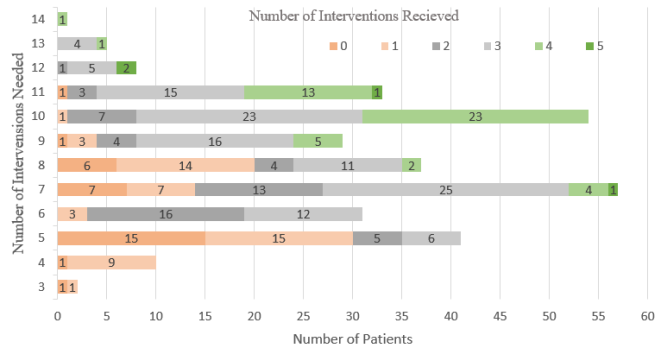
A severe deficit was observed in the delivery of needed interventions. The number of interventions needed per patient ranged from 3 to 14, while the number delivered ranged from 0 to 5. The proportion of interventions delivered was calculated for each patient. The study found that 81% (n=250) of traumatized patients received less than 40% of their needed interventions (Table 2), (Figure 1). Only one patient (0.3%) received more than 60% of the needed care. Specific life-saving interventions were notably underperformed: only 13% of patients with airway obstruction and 59% of those with bleeding received the appropriate intervention.
Table 1. Characteristics of Traumas of Patients who Attended Ibrahim-Malik Hospital, Aug 2022 (n = 308).
Variable
Categories
Count
%
Mechanism of trauma
Road Traffic Accident
74
24%
Hit by Solid Material
73
24%
Stab Wound
72
23%
Fall Down
49
16%
Burn/Electricity
19
6%
Sport Injury
11
4%
Gunshot
10
3%
Type of transportation
Private Car
272
88%
Public Transportation
31
10%
Ambulance
5
2%
Part of body affected
Head
105
34%
Upper Limb
81
26%
Abdomen
79
26%
Lower Limb
77
25%
Chest
29
9%
Pelvis
15
5%
Neck
5
2%
Table 2. Proportion of Standard Pre-Hospital Interventions Delivered to Major Trauma Patients (n = 308).
Interventions Delivered*
Number of Patients
Percent
Cumulative Percent
0%
32
10.4
10.4
1-20%
54
17.5
27.9
21-40%
164
53.2
81.2
41-60%
57
18.5
99.7
61-100%
1
0.3
100.0
Total
308
100
*Proportion = (Number of interventions delivered / Number of interventions needed) × 100
Figure 1. Fragmentation of Interventions Needed by the Interventions Delivered, by the Patients Who Attended Ibrahim-Malik Hospital, Aug 2022 (n = 308).
4. Discussion
This study reveals a critical inadequacy in the pre-hospital trauma care system in Khartoum, Sudan. The finding that 81% of major trauma patients received less than 40% of their needed interventions highlights a systemic failure that very likely contributes significantly to preventable mortality and morbidity, echoing critical gaps identified in other LMIC settings
[16]
Zogg, C. K., et al. (2024). Gaps in Prehospital Care for Trauma Patients in Low- and Middle-Income Countries: A Call for Standardized Data Collection. Injury, 55(1), 111-119.
The near-total absence of ambulance services (2%) and the overwhelming reliance on untrained laypersons for first aid (97% of aid was from untrained individuals) are the fundamental causes of this crisis. The high proportion of patients arriving at the hospital within one hour (81%) indicates that the problem is not primarily one of distance or travel time, but rather of the complete lack of professional care at the scene and during transport
[4]
National Association of Emergency Medical Technicians. PHTLS: Prehospital Trauma Life Support. 9th ed. Jones & Bartlett Learning; 2021.
[4]
.
The low rates of specific interventions, such as managing airway obstruction (13%) and controlling bleeding (59%), are particularly alarming as these are immediate life-threatening conditions addressed in the first steps (A and C) of the universal ABCDE approach to trauma
[5]
American College of Surgeons Committee on Trauma. Advanced Trauma Life Support (ATLS) Student Course Manual. 10th ed. American College of Surgeons; 2018.
[5]
. The unavailability of first aid equipment (only 1% of scenes had a first aid box) further exacerbates the situation, leaving well-intentioned bystanders unable to provide effective help. This situation is consistent with findings from other low-resource settings in Africa but appears more severe in the present context
[7]
Tsegaye G, Sultan M, Zemede B, Zewdie A. Pre-hospital Care to Trauma Patients in Addis Ababa, Ethiopia: Hospital-based Cross-sectional Study. Ethiopian Journal of Health Sciences. 2021, 31(5), 1019-1024.
Mulima G, Purcell LN, Maine R, Bjornstad EC, Charles A. Epidemiology of prehospital trauma deaths in Malawi: A retrospective cohort study. African Journal of Emergency Medicine. 2021, 11(2), 258-262.
Olotu, A., et al. (2023). The Burden and Outcomes of Road Traffic Injury Management in East Africa: A Scoping Review. Injury Prevention, 29(2), 180-188.
. The challenges of transport in complex settings have also been noted in recent studies from conflict areas
[15]
Murad, M. K., et al. (2021). A Prospective Study of Trauma Triage and Transport in a Conflict Setting. Journal of Trauma and Acute Care Surgery, 91(5S), S89-S95.
To address these gaps, a multi-pronged approach is essential, aligned with frameworks proposed for low-resource settings
[14]
Kobusingye, O., et al. (2022). Effective Pre-hospital Trauma Care in Low-Resource Settings: A Comprehensive Framework. BMJ Global Health, 7(4), e008490.
. First, establishing a formal pre-hospital care authority is crucial to coordinate efforts. Second, training community-based first responders—such as drivers, police officers, and community health workers—in a simplified trauma care protocol could leverage existing human resources to bridge the gap until formal services are expanded
[9]
Mock C, Joshipura M, Arreola-Risa C, Quansah R. An estimate of the number of lives that could be saved through improvements in trauma care globally. World Journal of Surgery. 2012, 36(5), 959-963.
. This should be coupled with the strategic placement of first aid kits. Systematic reviews have confirmed the effectiveness of such layperson training programs in improving trauma outcomes
[12]
Jayaraman, S., et al. (2022). Training Layperson First Responders in Trauma Care: A Systematic Review. The Lancet Global Health, 10(12), e1773-e1783.
. Finally, investing in and expanding a publicly accessible ambulance service is a long-term imperative.
A limitation of this study is its single-center, hospital-based design, which may limit generalizability and introduces potential survival bias by excluding those who died before arrival. Furthermore, the assessment of "needed interventions" was based on patient-reported symptoms and researcher assessment, which may be subject to misclassification. Despite these limitations, the study provides a compelling quantitative baseline on the state of pre-hospital trauma care in Khartoum.
5. Conclusions
The pre-hospital management of major trauma at the studied tertiary hospital in Khartoum State is severely deficient. The overwhelming majority of patients do not receive the majority of interventions they need, primarily due to a near-total lack of trained personnel and the limited formal ambulance services. Urgent action is required to implement a structured pre-hospital trauma care system, including the immediate development of a community first responder training program and a parallel strategy to increase the coverage and capacity of formal ambulance services to mitigate preventable deaths and disabilities.
Abbreviations
ATLS
Advanced Trauma Life Support
LMICs
Low- and Middle-income Countries
PHTLS
Pre-hospital Trauma Life Support
SPSS
Statistical Package for the Social Sciences
Acknowledgments
The authors thank the research department at Khartoum state ministry of health, the administration and staff of Ibrahim-Malik Hospital, and all the study participants.
Author Contributions
Sabir Abosror: Conceptualization, Methodology, Investigation, Data Curation, Formal Analysis, Writing – Original Draft.
This study received partial financing from the East Mediterranean Network for Public Health (EMPHENET). The funder had no role in the design, execution, or writing of the study.
Data Availability Statement
The datasets used and analyzed during the current study are available from the corresponding author on reasonable request.
Conflicts of Interest
The authors declare no conflicts of interest.
References
[1]
World Health Organization. Injury and violence. 2021. Available from:
Federal Ministry of Health - Sudan. Annual Health Statistical Report. Khartoum; 2020.
[3]
Gauss T, Ageron FX, Devaud ML, et al. Association of Prehospital Time to In-Hospital Trauma Mortality in a Physician-Staffed Emergency Medicine System. JAMA Surgery. 2019, 154(12), 1117-1124.
National Association of Emergency Medical Technicians. PHTLS: Prehospital Trauma Life Support. 9th ed. Jones & Bartlett Learning; 2021.
[5]
American College of Surgeons Committee on Trauma. Advanced Trauma Life Support (ATLS) Student Course Manual. 10th ed. American College of Surgeons; 2018.
[6]
Elsayed DEM, Eltayeb EM. Pre-hospital and in-hospital Management of Non-fatal Road Traffic Injuries in Khartoum State: A Case Study. Sudanese Journal of Public Health. 2012, 7(3), 98-103.
[7]
Tsegaye G, Sultan M, Zemede B, Zewdie A. Pre-hospital Care to Trauma Patients in Addis Ababa, Ethiopia: Hospital-based Cross-sectional Study. Ethiopian Journal of Health Sciences. 2021, 31(5), 1019-1024.
Mulima G, Purcell LN, Maine R, Bjornstad EC, Charles A. Epidemiology of prehospital trauma deaths in Malawi: A retrospective cohort study. African Journal of Emergency Medicine. 2021, 11(2), 258-262.
Mock C, Joshipura M, Arreola-Risa C, Quansah R. An estimate of the number of lives that could be saved through improvements in trauma care globally. World Journal of Surgery. 2012, 36(5), 959-963.
Mould-Millman, N. K., et al. (2021). State of Emergency Medical Services (EMS) Systems in Africa: A Scoping Review. Prehospital Emergency Care, 25(5), 697-711.
Olotu, A., et al. (2023). The Burden and Outcomes of Road Traffic Injury Management in East Africa: A Scoping Review. Injury Prevention, 29(2), 180-188.
World Health Organization. (2023). Global Status Report on Road Safety 2023. Geneva: World Health Organization. Licence: CC BY-NC-SA 3.0 IGO.
[14]
Kobusingye, O., et al. (2022). Effective Pre-hospital Trauma Care in Low-Resource Settings: A Comprehensive Framework. BMJ Global Health, 7(4), e008490.
Murad, M. K., et al. (2021). A Prospective Study of Trauma Triage and Transport in a Conflict Setting. Journal of Trauma and Acute Care Surgery, 91(5S), S89-S95.
Zogg, C. K., et al. (2024). Gaps in Prehospital Care for Trauma Patients in Low- and Middle-Income Countries: A Call for Standardized Data Collection. Injury, 55(1), 111-119.
Abosror, S., Izzoddeen, A., Elsayed, D. (2025). Assessment of Pre-hospital Management for Major Trauma Patients at a Tertiary Hospital in Khartoum State, Sudan, 2022. Science Journal of Public Health, 13(6), 348-353. https://doi.org/10.11648/j.sjph.20251306.14
Abosror, S.; Izzoddeen, A.; Elsayed, D. Assessment of Pre-hospital Management for Major Trauma Patients at a Tertiary Hospital in Khartoum State, Sudan, 2022. Sci. J. Public Health2025, 13(6), 348-353. doi: 10.11648/j.sjph.20251306.14
Abosror S, Izzoddeen A, Elsayed D. Assessment of Pre-hospital Management for Major Trauma Patients at a Tertiary Hospital in Khartoum State, Sudan, 2022. Sci J Public Health. 2025;13(6):348-353. doi: 10.11648/j.sjph.20251306.14
@article{10.11648/j.sjph.20251306.14,
author = {Sabir Abosror and Ahmad Izzoddeen and Dyaeldin Elsayed},
title = {Assessment of Pre-hospital Management for Major Trauma Patients at a Tertiary Hospital in Khartoum State, Sudan, 2022},
journal = {Science Journal of Public Health},
volume = {13},
number = {6},
pages = {348-353},
doi = {10.11648/j.sjph.20251306.14},
url = {https://doi.org/10.11648/j.sjph.20251306.14},
eprint = {https://article.sciencepublishinggroup.com/pdf/10.11648.j.sjph.20251306.14},
abstract = {Background: Trauma is defined as physical injury resulting from exposure to external energy. Major trauma poses a significant public health challenge in Sudan, where effective pre-hospital care is critical for survival and better outcomes, yet remains underdeveloped. This study aimed to quantitatively assess the pre-hospital management received by major trauma patients at a tertiary hospital in Khartoum State. Methods: A descriptive, cross-sectional, hospital-based study was conducted at Ibrahim-Malik Hospital in August 2022. We enrolled 308 major trauma patients via consecutive sampling. Data on demographics, trauma characteristics, and the delivery of 14 predefined standard interventions were collected via face-to-face interviews. The primary outcome was the proportion of needed interventions actually delivered. Results: The majority of participants were male (79%) and aged 17-40 years (80%). The most common injury mechanisms were road traffic accidents (24%), being hit by solid objects (24%), and stab wounds (23%). Only 2% of patients were transported by ambulance. While 73% received some form of first aid, merely 3% received it from a trained person. Critically, 81% of patients received less than 40% of their needed interventions. Significant gaps were identified in managing airway obstruction (only 13% of affected patients received care) and controlling bleeding (59%). Conclusion: Pre-hospital trauma care in Khartoum is significantly inadequate, characterized by reliance on untrained laypersons, severely limited ambulance services, and a critical deficit in essential intervention delivery. Urgent establishment of a formal pre-hospital care system, including community first responder training and expanded ambulance coverage, is imperative to mitigate preventable trauma deaths and disabilities.},
year = {2025}
}
TY - JOUR
T1 - Assessment of Pre-hospital Management for Major Trauma Patients at a Tertiary Hospital in Khartoum State, Sudan, 2022
AU - Sabir Abosror
AU - Ahmad Izzoddeen
AU - Dyaeldin Elsayed
Y1 - 2025/12/20
PY - 2025
N1 - https://doi.org/10.11648/j.sjph.20251306.14
DO - 10.11648/j.sjph.20251306.14
T2 - Science Journal of Public Health
JF - Science Journal of Public Health
JO - Science Journal of Public Health
SP - 348
EP - 353
PB - Science Publishing Group
SN - 2328-7950
UR - https://doi.org/10.11648/j.sjph.20251306.14
AB - Background: Trauma is defined as physical injury resulting from exposure to external energy. Major trauma poses a significant public health challenge in Sudan, where effective pre-hospital care is critical for survival and better outcomes, yet remains underdeveloped. This study aimed to quantitatively assess the pre-hospital management received by major trauma patients at a tertiary hospital in Khartoum State. Methods: A descriptive, cross-sectional, hospital-based study was conducted at Ibrahim-Malik Hospital in August 2022. We enrolled 308 major trauma patients via consecutive sampling. Data on demographics, trauma characteristics, and the delivery of 14 predefined standard interventions were collected via face-to-face interviews. The primary outcome was the proportion of needed interventions actually delivered. Results: The majority of participants were male (79%) and aged 17-40 years (80%). The most common injury mechanisms were road traffic accidents (24%), being hit by solid objects (24%), and stab wounds (23%). Only 2% of patients were transported by ambulance. While 73% received some form of first aid, merely 3% received it from a trained person. Critically, 81% of patients received less than 40% of their needed interventions. Significant gaps were identified in managing airway obstruction (only 13% of affected patients received care) and controlling bleeding (59%). Conclusion: Pre-hospital trauma care in Khartoum is significantly inadequate, characterized by reliance on untrained laypersons, severely limited ambulance services, and a critical deficit in essential intervention delivery. Urgent establishment of a formal pre-hospital care system, including community first responder training and expanded ambulance coverage, is imperative to mitigate preventable trauma deaths and disabilities.
VL - 13
IS - 6
ER -
General Directorate of Emergency and Epidemic Control, Federal Ministry of Health, Khartoum, Sudan;Field Epidemiology Training Program, Federal Ministry of Health, Khartoum, Sudan
Biography:
Sabir Abosror is a Field Epidemiologist at the General Directorate of Health Emergencies and Epidemics Control, Sudan Federal Ministry of Health. He completed his Advanced Field Epidemiology Certificate from the Sudan Field Epidemiology Training Program (S-FETP) in 2022, and his Clinical M. D. in Community Medicine from the Sudan Medical Specialization Board in 2013. Recognized for his exceptional contributions, Dr. Mokhtar has been honored with the designation of Field Epidemiologist. In addition, he holds competencies in outbreak investigation, public health surveillance system evaluation, and epidemiologic study design. He has participated in multiple research collaboration projects in recent years. He currently serves as S-FETP Coordinator and has been involved in leading national outbreak responses and contributing to scientific manuscripts for peer-reviewed journals.
Research Fields:
Public Health Surveillance Systems, Infectious Disease Outbreak Response, Disaster and Emergency Response, Health Systems and Services Evaluation, Trauma and Emergency Care, Chronic Disease Management, Geriatric Health Services.
General Directorate of Emergency and Epidemic Control, Federal Ministry of Health, Khartoum, Sudan;Field Epidemiology Training Program, Federal Ministry of Health, Khartoum, Sudan
Research Fields:
Public health, Global Health, Epidemiology, Public Health Emergency Management, Communicable Disease Control, Health Policy and Planning.

Faculty of Medicine, Alzaiem Alazhari University, Khartoum, Sudan
Research Fields:
Research Ethics and Governance, Health Systems and Policy Research, Infectious Diseases and Antimicrobial Resistance, Maternal and Child Health, Clinical Medicine and Surgery, Public Health Practice.
Abosror, S., Izzoddeen, A., Elsayed, D. (2025). Assessment of Pre-hospital Management for Major Trauma Patients at a Tertiary Hospital in Khartoum State, Sudan, 2022. Science Journal of Public Health, 13(6), 348-353. https://doi.org/10.11648/j.sjph.20251306.14
Abosror, S.; Izzoddeen, A.; Elsayed, D. Assessment of Pre-hospital Management for Major Trauma Patients at a Tertiary Hospital in Khartoum State, Sudan, 2022. Sci. J. Public Health2025, 13(6), 348-353. doi: 10.11648/j.sjph.20251306.14
Abosror S, Izzoddeen A, Elsayed D. Assessment of Pre-hospital Management for Major Trauma Patients at a Tertiary Hospital in Khartoum State, Sudan, 2022. Sci J Public Health. 2025;13(6):348-353. doi: 10.11648/j.sjph.20251306.14
@article{10.11648/j.sjph.20251306.14,
author = {Sabir Abosror and Ahmad Izzoddeen and Dyaeldin Elsayed},
title = {Assessment of Pre-hospital Management for Major Trauma Patients at a Tertiary Hospital in Khartoum State, Sudan, 2022},
journal = {Science Journal of Public Health},
volume = {13},
number = {6},
pages = {348-353},
doi = {10.11648/j.sjph.20251306.14},
url = {https://doi.org/10.11648/j.sjph.20251306.14},
eprint = {https://article.sciencepublishinggroup.com/pdf/10.11648.j.sjph.20251306.14},
abstract = {Background: Trauma is defined as physical injury resulting from exposure to external energy. Major trauma poses a significant public health challenge in Sudan, where effective pre-hospital care is critical for survival and better outcomes, yet remains underdeveloped. This study aimed to quantitatively assess the pre-hospital management received by major trauma patients at a tertiary hospital in Khartoum State. Methods: A descriptive, cross-sectional, hospital-based study was conducted at Ibrahim-Malik Hospital in August 2022. We enrolled 308 major trauma patients via consecutive sampling. Data on demographics, trauma characteristics, and the delivery of 14 predefined standard interventions were collected via face-to-face interviews. The primary outcome was the proportion of needed interventions actually delivered. Results: The majority of participants were male (79%) and aged 17-40 years (80%). The most common injury mechanisms were road traffic accidents (24%), being hit by solid objects (24%), and stab wounds (23%). Only 2% of patients were transported by ambulance. While 73% received some form of first aid, merely 3% received it from a trained person. Critically, 81% of patients received less than 40% of their needed interventions. Significant gaps were identified in managing airway obstruction (only 13% of affected patients received care) and controlling bleeding (59%). Conclusion: Pre-hospital trauma care in Khartoum is significantly inadequate, characterized by reliance on untrained laypersons, severely limited ambulance services, and a critical deficit in essential intervention delivery. Urgent establishment of a formal pre-hospital care system, including community first responder training and expanded ambulance coverage, is imperative to mitigate preventable trauma deaths and disabilities.},
year = {2025}
}
TY - JOUR
T1 - Assessment of Pre-hospital Management for Major Trauma Patients at a Tertiary Hospital in Khartoum State, Sudan, 2022
AU - Sabir Abosror
AU - Ahmad Izzoddeen
AU - Dyaeldin Elsayed
Y1 - 2025/12/20
PY - 2025
N1 - https://doi.org/10.11648/j.sjph.20251306.14
DO - 10.11648/j.sjph.20251306.14
T2 - Science Journal of Public Health
JF - Science Journal of Public Health
JO - Science Journal of Public Health
SP - 348
EP - 353
PB - Science Publishing Group
SN - 2328-7950
UR - https://doi.org/10.11648/j.sjph.20251306.14
AB - Background: Trauma is defined as physical injury resulting from exposure to external energy. Major trauma poses a significant public health challenge in Sudan, where effective pre-hospital care is critical for survival and better outcomes, yet remains underdeveloped. This study aimed to quantitatively assess the pre-hospital management received by major trauma patients at a tertiary hospital in Khartoum State. Methods: A descriptive, cross-sectional, hospital-based study was conducted at Ibrahim-Malik Hospital in August 2022. We enrolled 308 major trauma patients via consecutive sampling. Data on demographics, trauma characteristics, and the delivery of 14 predefined standard interventions were collected via face-to-face interviews. The primary outcome was the proportion of needed interventions actually delivered. Results: The majority of participants were male (79%) and aged 17-40 years (80%). The most common injury mechanisms were road traffic accidents (24%), being hit by solid objects (24%), and stab wounds (23%). Only 2% of patients were transported by ambulance. While 73% received some form of first aid, merely 3% received it from a trained person. Critically, 81% of patients received less than 40% of their needed interventions. Significant gaps were identified in managing airway obstruction (only 13% of affected patients received care) and controlling bleeding (59%). Conclusion: Pre-hospital trauma care in Khartoum is significantly inadequate, characterized by reliance on untrained laypersons, severely limited ambulance services, and a critical deficit in essential intervention delivery. Urgent establishment of a formal pre-hospital care system, including community first responder training and expanded ambulance coverage, is imperative to mitigate preventable trauma deaths and disabilities.
VL - 13
IS - 6
ER -