
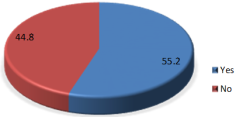
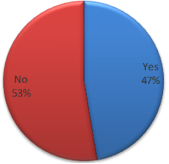
Mining is an industry that significantly contributes to the improvement of economic growth and development in many countries. The global rates of occupational injuries, illnesses and fatalities associated with mining are alarming. The international Labour Organization (ILO) estimates that quarrying activities accounts for 8% of the world work related fatalities. Quarrying in Kenya creates employment opportunities, support local construction and a major source of national economy. Kisii County is enriched with soapstone resources in Tabaka which are mined and carved to form different sculptures that are sold both locally and internationally. Despite the enactment of legal and institutional frameworks many workers in different sectors work in the presence of occupational hazards which lead to huge burden of accidents, and occupational injuries. The objective of the study was to assess the level of awareness on prevention of injuries among soapstone mine workers in Tabaka, Kisii County, Kenya. The research adopted cross sectional design from a population of 222 soapstone mine workers from five selected registered self-help groups involved in mining and carving of soapstone products. A sample of 174 was proportionately randomly selected from the five self-help groups. Structured questionnaires were used to collect data on nature and frequency of accidents and awareness on prevention measures on occupational hazards. An interview was conducted with the quarry managers and key informants involved in occupational safety and health. An observational checklist was used to record how quarry activities were performed. Data collected was cleaned, coded, tabulated and subjected to statistical analysis using SPSS version 21.0. It was established that 43.1% of the miners were involved in the main activity of cutting of soapstone into different sizes and shapes. More than half, 58.6% of the miners were aware mining has occupational hazards but were not trained (63.8%) to identify occupation hazards. Respondents were aware of use of protective equipment 55.2% but 53.3% had not been trained on occupational health and safety with 53.4% soapstone miners not reporting the accidents. The study revealed statistical significance on training and identification of hazards (p<0.001), awareness on prevention of occupation injuries (p<0.001), wearing PPE (p<0.001), type of PPE (p=0.017) and trainer of OSH with awareness on prevention of occupation injuries. The study concluded that the respondents could identify occupational health and safety hazards and related effects of soapstone quarrying activities. However, soapstone mine workers lacked awareness on prevention of injuries and occupation safety.
| Published in | Science Journal of Public Health (Volume 13, Issue 6) |
| DOI | 10.11648/j.sjph.20251306.12 |
| Page(s) | 330-337 |
| Creative Commons |
This is an Open Access article, distributed under the terms of the Creative Commons Attribution 4.0 International License (http://creativecommons.org/licenses/by/4.0/), which permits unrestricted use, distribution and reproduction in any medium or format, provided the original work is properly cited. |
| Copyright |
Copyright © The Author(s), 2025. Published by Science Publishing Group |
Injuries, Occupational, Health, Safety, Awareness, Prevention, Kisii, Kenya
Variable | Category | Frequency | Percent% |
|---|---|---|---|
Gender | Male | 129 | 74.1 |
Female | 45 | 25.9 | |
Age | 18-35 | 52 | 29.9 |
36-50 | 114 | 65.5 | |
>50 | 8 | 4.6 | |
Education | No formal education | 3 | 1.5 |
Primary | 103 | 59.2 | |
Secondary | 40 | 23 | |
Tertiary | 28 | 16.1 | |
Marital status | Single | 6 | 51.7 |
Married | 153 | 76.9 | |
Separated | 14 | 8 | |
Widowed | 1 | 0.6 |
Variable | Category | Frequency | Percentage |
|---|---|---|---|
Source of information | Mine site manager | 4 | 2.3 |
Radio/TV | 6 | 3.4 | |
Friend/family | 4 | 2.3 | |
Fellow miner | 21 | 12.1 | |
Newspaper | 10 | 5.7 | |
Training | 60 | 34.5 | |
Experience | 69 | 39.7 |
Variable | Category | Frequency | Percent% |
|---|---|---|---|
Wear PPE | Yes | 116 | 66.7 |
No | 58 | 33.3 | |
Type of PPE | Protective helmets | 43 | 37.1 |
Face shields/masks | 21 | 18.1 | |
Gloves | 20 | 17.2 | |
Safety boots | 19 | 16.4 | |
Aprons | 13 | 11.2 | |
Source of PPE | Bought for myself | 71 | 61.2 |
Given by family/friend | 10 | 8.6 | |
No provider | 35 | 30.2 | |
Reason for not using PPE | Not provided | 12 | 20.7 |
Not required | 10 | 17.2 | |
Not comfortable | 13 | 22.4 | |
Not affordable | 22 | 37.9 | |
Forget to use | 1 | 1.7 |
Variable | Category | Aware of prevention of occupation injuries | Chi Square, p value, df | |
|---|---|---|---|---|
Yes (%) | No (%) | |||
Source of OSH safety at workplace | Mine site manager | 4 (4.2%) | 0 (0%) | χ2=109.776 p=0.000, df=6 |
Radio/Tv | 0 (0%) | 6 (7.7%) | ||
Fellow miner | 21 (21.9%) | 0 (0%) | ||
Family/friend | 3 (3.1%) | 1 (1.3%) | ||
Newspaper | 0 (0%) | 10 (12.8%) | ||
Training | 55 (57.3%) | 5 (6.4%) | ||
Experience | 13 (13.5%) | 56 (22.2%) | ||
Wear PPE | Yes | 75 (78.1%) | 41 (52.6%) | χ2=12.653 p=0.000, df=1 |
No | 21 (21.9%) | 37 (47.4%) | ||
Type of PPE | Helmets | 44 (45.8%) | 18 (23.1%) | χ2=12.103 p=0.017, df=4 |
Glasses/face shields | 15 (15.6%) | 18 (23.1%) | ||
Gloves | 17 (17.7%) | 13 (16.7%) | ||
Safety boots | 9 (9.4%) | 16 (20.5%) | ||
Aprons | 11 (11.5%) | 13 (16.7%) | ||
Source of PPE | Bought for self | 70 (72.9%) | 37 (47.4%) | χ2=25.486 p=0.000, df=2 |
Given by family/friend | 11 (11.5%) | 2 (2.6%) | ||
Provided by manager | 0 (0%) | 0 (0%) | ||
Other | 15 (15.6%) | 39 (50.0%) | ||
Reason of not using PPE | Not provided | 23 (65.7%) | 12 (15.4%) | χ2=6.156 p=0.291, df=5 |
Not required | 17 (17.7%) | 9 (11.5%) | ||
Not comfortable | 28 (29.2%) | 21 (26.9%) | ||
Not affordable | 24 (25.0% | 31 (39.7%) | ||
Forget to use | 3 (3.1%) | 4 (5.1%) | ||
Not aware of importance | 1 (1%) | 1 (1.3%) | ||
Trained on basic occupation safety | Yes | 74 (77.3%) | 9 (10.9%) | χ2=77.363 p=0.000, df=2 |
No | 22 (22.9%) | 69 (88.5%) | ||
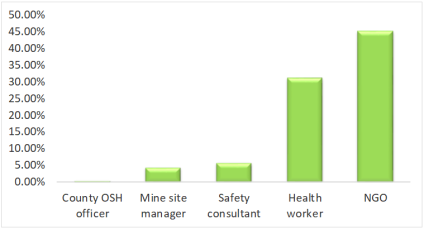
Trainer of OSH | County OSH officer | 1 (1%) | 0 (0%) | χ2=82.291 p=0.000, df=4 |
Mine site manager | 9 (9.4%) | 0 (0%) | ||
Safety consultant | 11 (11.5%) | 1 (1.3%) | ||
Health worker | 55 (57.3%) | 7 (9.0%) | ||
NGO | 20 (20.8%) | 70 (89.7%) | ||
ILO | International Labour Organization |
SPSS | Statistical Package for Social Science |
PPE | Personal Protective Equipment |
U.S | United States |
GDP | Gross Domestic Product |
USD | United States Dollar |
WHO | World Health Organization |
OSH | Occupational Safety and Health |
NGO | Non Government Organization |
IDSR | Integrated Disease Surveillance and Response |
CLTS | Community-Led Total Sanitation |
ODF | Open Defecation Free (ODF) |
WASH | Water Sanitation and Hygiene |
| [1] | Pavolová, H., Čulková, K., Šimková, Z., Seňová, A., & Kudelas, D. (2022). Contribution of mining industry in chosen EU countries to the sustainability issues. Sustainability, 14(7), 4177. |
| [2] | Kainat, S., & Shahzadi, A. (2021). Managing Occupational Health and Safety in the Mining Industry. Agriculture and Environment, 2(2), 17-22. AEN-2021-02-02-006 |
| [3] | Ayuk, E., Pedro, A., Ekins, P., Gatune, J., Milligan, B., Oberle, B.... & Mancini, L. (2020). Mineral Resource Governance in the 21st Century: Gearing extractive industries towards sustainable development. International Resource Panel, United Nations Envio, Nairobi, Kenya. |
| [4] | Hilson, G., & Maconachie, R. (2020). Artisanal and small-scale mining and the Sustainable Development Goals: Opportunities and new directions for sub-Saharan Africa. Geoforum, 111, 125-141. |
| [5] | Kumar, C. R., Verma, K. C., & Neetika, A. (2016). An assessment of the knowledge, attitudes and practices about the prevention of occupational hazards and utilization of safety measures among meat workers in a city of Haryana state of India. Indian Journal of Applied Research, 6(3), 40-48. |
| [6] | Mitullah, W. V., & Wachira, I. N. (2011). Informal labour in the construction industry in Kenya: A case study of Nairobi. |
| [7] | Rumbe, O. G. (2021). An Assessment of the Effects of Artisanal Mining in Tabaka, Kisii County, Kenya (Doctoral dissertation, University of Nairobi). |
| [8] | Akama, J. S., & Onyambu, M. M. K. (2020). The role of the Gusii soapstone industry in promoting sustainable livelihoods: A historical perspective. African Journal of Hospitality, Tourism and Leisure, 9(1), 1-12. |
| [9] | Wachira, W. B. (2017). Status of occupational safety and health in flour milling companies in Nairobi Kenya (Doctoral dissertation, COHES, JKUAT). |
| [10] | World Bank. (2020). 2020 State of the Artisanal and Small Scale Mining Sector. Washington, D. C.: World Bank. |
| [11] | Health and Safety Executive. (2018). Benefits of good health and safety. Retrieved from |
| [12] | Kenya Health Information System (2019). KHIS for aggregate reporting and analysis Retrieved from |
| [13] | Arasa, R., Achuora, J., & Okello, C. (2020). Artisanal mining practices: A study of selected counties in Kenya. |
| [14] | Beth, A. A. (2018). Assessment Of Occupational Safety Compliance In Small-Scale Gold Mines In Siaya County, Kenya (Doctoral dissertation, University of Nairobi). |
| [15] | Ayoo, B. A., & Moronge, J. (2019). Factors influencing compliance with occupational safety regulations and requirements among artisanal and small-scale miners in central sakwa ward, Siaya County. Journal of Sustainability, Environment and Peace, 1(1), 1-5. |
| [16] | Makokha, W. R. (2021). Determinants of Occupational Injuries among Workers in Artisanal and Small-Scale Gold Mining Activities in Kakamega County, Kenya (Doctoral dissertation, Kenyatta University). |
| [17] | Chepchumba, J. (2020). Assessment of Occupational Hazard Awareness and Safety Measures among Quarry Workers in Bomet County, Kenya (Doctoral dissertation). |
| [18] | MacEachen, E., & Kosny, A. (2016). Qualitative Evidence in Occupational Health. Handbook of Qualitative Health Research for Evidence-Based Practice, 225-241. |
| [19] | Calys-Tagoe, B. N., Ovadje, L., Clarke, E., Basu, N., & Robins, T. (2015). Injury profiles associated with artisanal and small-scale gold mining in Tarkwa, Ghana. International journal of environmental research and public health, 12(7), 7922-7937. |
| [20] | Ezisi, C. N., Eze, B. I., Okoye, O., & Arinze, O. (2017). Correlates of stone quarry workers' awareness of work-related ocular health hazards and utilization of protective eye devices: Findings in southeastern Nigeria. Indian journal of occupational and environmental medicine, 21(2), 51-55. |
| [21] | Wanjiku, M. W. (2015). Occupational health and safety hazards associated with quarrying activities; A case of Mutonga Quarry, Meru County, Kenya (Doctoral dissertation). |
APA Style
Yator, M., Ontiri, A., Ogugu, N. (2025). Level of Awareness on Prevention of Injuries Among Soapstone Mine Workers in Tabaka, Kisii County, Kenya. Science Journal of Public Health, 13(6), 330-337. https://doi.org/10.11648/j.sjph.20251306.12
ACS Style
Yator, M.; Ontiri, A.; Ogugu, N. Level of Awareness on Prevention of Injuries Among Soapstone Mine Workers in Tabaka, Kisii County, Kenya. Sci. J. Public Health 2025, 13(6), 330-337. doi: 10.11648/j.sjph.20251306.12
AMA Style
Yator M, Ontiri A, Ogugu N. Level of Awareness on Prevention of Injuries Among Soapstone Mine Workers in Tabaka, Kisii County, Kenya. Sci J Public Health. 2025;13(6):330-337. doi: 10.11648/j.sjph.20251306.12
@article{10.11648/j.sjph.20251306.12,
  author = {Medrine Yator and Alex Ontiri and Nickson Ogugu},
  title = {Level of Awareness on Prevention of Injuries Among Soapstone Mine Workers in Tabaka, Kisii County, Kenya},
  journal = {Science Journal of Public Health},
  volume = {13},
  number = {6},
  pages = {330-337},
  doi = {10.11648/j.sjph.20251306.12},
  url = {https://doi.org/10.11648/j.sjph.20251306.12},
  eprint = {https://article.sciencepublishinggroup.com/pdf/10.11648.j.sjph.20251306.12},
  abstract = {Mining is an industry that significantly contributes to the improvement of economic growth and development in many countries. The global rates of occupational injuries, illnesses and fatalities associated with mining are alarming. The international Labour Organization (ILO) estimates that quarrying activities accounts for 8% of the world work related fatalities. Quarrying in Kenya creates employment opportunities, support local construction and a major source of national economy. Kisii County is enriched with soapstone resources in Tabaka which are mined and carved to form different sculptures that are sold both locally and internationally. Despite the enactment of legal and institutional frameworks many workers in different sectors work in the presence of occupational hazards which lead to huge burden of accidents, and occupational injuries. The objective of the study was to assess the level of awareness on prevention of injuries among soapstone mine workers in Tabaka, Kisii County, Kenya. The research adopted cross sectional design from a population of 222 soapstone mine workers from five selected registered self-help groups involved in mining and carving of soapstone products. A sample of 174 was proportionately randomly selected from the five self-help groups. Structured questionnaires were used to collect data on nature and frequency of accidents and awareness on prevention measures on occupational hazards. An interview was conducted with the quarry managers and key informants involved in occupational safety and health. An observational checklist was used to record how quarry activities were performed. Data collected was cleaned, coded, tabulated and subjected to statistical analysis using SPSS version 21.0. It was established that 43.1% of the miners were involved in the main activity of cutting of soapstone into different sizes and shapes. More than half, 58.6% of the miners were aware mining has occupational hazards but were not trained (63.8%) to identify occupation hazards. Respondents were aware of use of protective equipment 55.2% but 53.3% had not been trained on occupational health and safety with 53.4% soapstone miners not reporting the accidents. The study revealed statistical significance on training and identification of hazards (p<0.001), awareness on prevention of occupation injuries (p<0.001), wearing PPE (p<0.001), type of PPE (p=0.017) and trainer of OSH with awareness on prevention of occupation injuries. The study concluded that the respondents could identify occupational health and safety hazards and related effects of soapstone quarrying activities. However, soapstone mine workers lacked awareness on prevention of injuries and occupation safety.},
 year = {2025}
}
TY  - JOUR
T1  - Level of Awareness on Prevention of Injuries Among Soapstone Mine Workers in Tabaka, Kisii County, Kenya
AU  - Medrine Yator
AU  - Alex Ontiri
AU  - Nickson Ogugu
Y1  - 2025/12/09
PY  - 2025
N1  - https://doi.org/10.11648/j.sjph.20251306.12
DO  - 10.11648/j.sjph.20251306.12
T2  - Science Journal of Public Health
JF  - Science Journal of Public Health
JO  - Science Journal of Public Health
SP  - 330
EP  - 337
PB  - Science Publishing Group
SN  - 2328-7950
UR  - https://doi.org/10.11648/j.sjph.20251306.12
AB  - Mining is an industry that significantly contributes to the improvement of economic growth and development in many countries. The global rates of occupational injuries, illnesses and fatalities associated with mining are alarming. The international Labour Organization (ILO) estimates that quarrying activities accounts for 8% of the world work related fatalities. Quarrying in Kenya creates employment opportunities, support local construction and a major source of national economy. Kisii County is enriched with soapstone resources in Tabaka which are mined and carved to form different sculptures that are sold both locally and internationally. Despite the enactment of legal and institutional frameworks many workers in different sectors work in the presence of occupational hazards which lead to huge burden of accidents, and occupational injuries. The objective of the study was to assess the level of awareness on prevention of injuries among soapstone mine workers in Tabaka, Kisii County, Kenya. The research adopted cross sectional design from a population of 222 soapstone mine workers from five selected registered self-help groups involved in mining and carving of soapstone products. A sample of 174 was proportionately randomly selected from the five self-help groups. Structured questionnaires were used to collect data on nature and frequency of accidents and awareness on prevention measures on occupational hazards. An interview was conducted with the quarry managers and key informants involved in occupational safety and health. An observational checklist was used to record how quarry activities were performed. Data collected was cleaned, coded, tabulated and subjected to statistical analysis using SPSS version 21.0. It was established that 43.1% of the miners were involved in the main activity of cutting of soapstone into different sizes and shapes. More than half, 58.6% of the miners were aware mining has occupational hazards but were not trained (63.8%) to identify occupation hazards. Respondents were aware of use of protective equipment 55.2% but 53.3% had not been trained on occupational health and safety with 53.4% soapstone miners not reporting the accidents. The study revealed statistical significance on training and identification of hazards (p<0.001), awareness on prevention of occupation injuries (p<0.001), wearing PPE (p<0.001), type of PPE (p=0.017) and trainer of OSH with awareness on prevention of occupation injuries. The study concluded that the respondents could identify occupational health and safety hazards and related effects of soapstone quarrying activities. However, soapstone mine workers lacked awareness on prevention of injuries and occupation safety.
VL  - 13
IS  - 6
ER  -
Department of Medical Services and Public Health, Kisii County Government, Kisii, Kenya
Biography: Medrine Yator is a Public Health Officer and Field Epidemiologist with over nine years of experience in disease surveillance, outbreak response, and health systems strengthening. She serves with the County Government of Kisii, Kenya, as a Sub-County Disease Surveillance Coordinator and Public Health Officer, where she leads public health emergency preparedness and implementation of Integrated Disease Surveillance and Response (IDSR) strategies. She has coordinated impactful public health interventions, including Community-Led Total Sanitation (CLTS) programs that enabled communities to attain Open Defecation Free (ODF) status, and has strengthened community health structures through the training and supervision. Medrine has collaborated with partners such as AMREF to advance disease prevention and health promotion. She holds an MSc in Occupational Health and Safety from Jomo Kenyatta University of Agriculture and Technology and a BSc in Environmental Health from Kenyatta University. Her research interests include epidemiological surveillance, infectious disease control, WASH and community-based public health interventions.
Research Fields: Epidemiology, Public Health, Community Health, Occupational Health and Safety

Department of Medical Services, Kisii University, Kisii, Kenya
Research Fields: Clinical Medicine, Clinical Research, Epidemiology, Public Health, Community Health, Occupational Health and Safety
Department of Medical Services and Public Health, Kisii County Government, Kisii, Kenya
Research Fields: Epidemiology, Public Health, Community Health, Occupational Health and Safety




 Share This Article
 Twitter
 Linked In
 Facebook
 Copy
Copy Download